Chess Online
- 4.6
- Rating
- 5.00M
- Installs
- Free
- Price

 Analysis by App-foxy
I usually judge an online chess game twice: first by how quickly it gets me into a match, and later by whether I still want to open it after the initial curiosity has gone. Chess Online, from Chess Friends, makes a strong first impression because its purpose is immediately clear. It is a free board game built around playing chess with people around the world, rather than surrounding the board with a large collection of unrelated activities. After spending time with it, I found that its real value depends less on novelty and more on whether you already enjoy making chess part of your routine.
The game has been available since January 25, 2013, and its continued presence is reflected in a 4.6 average from around 181 thousand ratings, with more than 5 million installs. Those figures do not automatically make every match enjoyable, but they do suggest that this is not a short-lived experiment. I see it as a practical mobile chess room: easy to revisit, familiar enough for regular play, and most rewarding when I use it with a clear purpose instead of opening it aimlessly.
What feels good in the first week
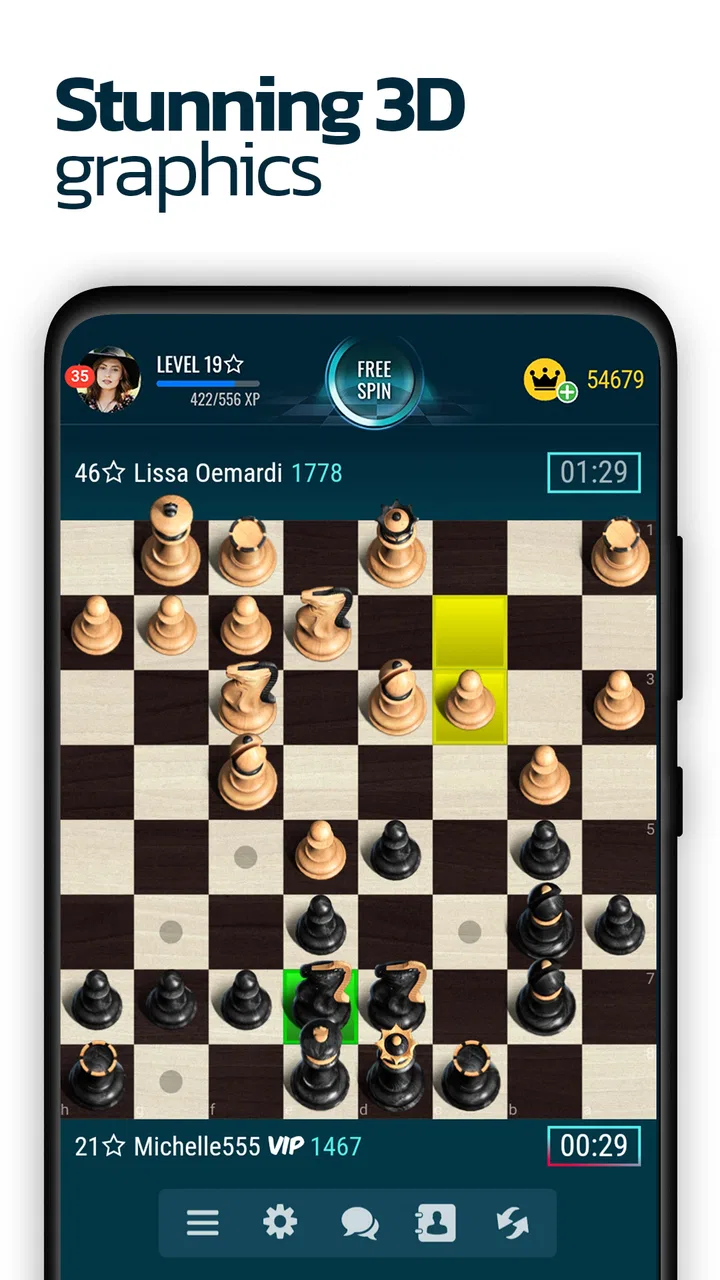
During the first week, the biggest advantage is focus. Chess Online does not need much explanation if you already know how the pieces move. I can open it with the intention of playing, rather than spending several minutes learning a complicated interface. That directness is especially useful on a phone, where a crowded design can make a simple board feel unnecessarily difficult.
You May Also Like

 Blood Strike: 2.5 Anniversary
Blood Strike’s Loadouts Turn Every Drop Into a Tactical Gamble
A close look at Blood Strike’s custom loadouts: how fast access to signature weapons reshapes its battle royale rhythm, rewards preparation, and narrows the gap between fights.

 Pandora - Music & Podcasts
Pandora’s Music Is Easy to Start, but Harder to Recover
Pandora’s strength is its low-effort path from a seed to a station. Its weak spot is how much confidence it asks you to place in connection, setup, and quiet recovery.

 8 Ball Pool
 Is Built on Rivalries, Rematches, and Routine
A close look at the rivalries, rematches, shared routines, and unanswered safety questions that turn a quick pool match into a persistent mobile community.

 Samsung Music
’s Quiet Strength Is Playing What You Already Own
Its reach comes less from spectacle than from dependable access to a personal library. That simplicity is both the app’s strongest retention engine and its ceiling.

 AccuWeather: Weather Radar
AccuWeather Review: A Quick, Clear Forecast for Everyday Decisions
For everyday plans, the best forecast is the one you can understand quickly. AccuWeather makes rain timing, radar, and local conditions easy to act on, with a few trade-offs.

 Hill Climb Racing
Why Hill Climb Racing Still Turns Crashes Into One More Run
A tiny car, a bumpy hill and one more upgrade: Hill Climb Racing keeps resurfacing because its simple chaos makes every near-miss feel personal.
More From Our News Desk



The online format also gives each session a little more weight than a puzzle against a computer. When I play a real opponent, even a familiar opening feels less predictable. I have to watch for the other player’s plan, manage my time and accept that a comfortable position can change after one careless move. That human uncertainty is the reason I would choose this game over a purely offline chessboard when I want a more active session.
Chess Online is free to start, which removes the main barrier for someone who wants to test it casually. It carries a Teen content rating, so it is not presented as a children’s-only game. Optional in-app purchases range from $1.19 to $129.99 per item, a very wide span that makes it sensible to treat purchases carefully. I would begin with the free experience and decide later whether any paid option genuinely improves my use of the game.
One useful first-week habit is to avoid judging yourself by wins alone. I get more value when I choose one small aim before a match: protect my king, stop moving the same piece repeatedly, or look for my opponent’s threat before planning my own attack. This turns a quick mobile game into a manageable practice session. It also exposes whether the app suits me. If I only enjoy it when I am winning, the online format may become frustrating quickly.
The game is a particularly good fit for someone who already understands basic chess and wants regular opponents without arranging a face-to-face game. It can also work for a returning player who remembers the rules but needs a low-pressure way to rebuild confidence. I would be more cautious about recommending it as a first chess teacher. A complete beginner may need structured explanations, guided lessons or a more deliberate learning path than an online match naturally provides.
How I use it in ordinary daily gaps
A realistic use case is a short break during the day. I might have enough time for one focused game but not enough energy for a long study session. In that situation, Chess Online gives me a clear activity with a beginning, middle and end. I can play a game, notice one mistake and put the phone away without committing to a larger entertainment system.
That convenience has a trade-off. A chess game is not always as short or predictable as a quick arcade round. If I start one while distracted, I may make hurried decisions or leave the board mentally before the game is finished. I therefore prefer opening it when I can give the match uninterrupted attention. The app is convenient, but the board still demands concentration from me.
Another practical approach is to use each game as a review prompt. After losing, I ask myself which decision changed the position: an unprotected piece, a premature attack or a failure to notice a check. I do not need a long analysis routine to learn something. Even a brief note in my head can stop the same error from becoming an automatic habit. This is one of the less obvious strengths of a simple online chess app: its usefulness grows when I bring my own method to it.
Why it can keep earning a place month after month
Chess has an unusual advantage over many mobile games: the basic activity does not become obsolete. The board remains the same, but the decisions do not. A position that feels easy one day can expose a weakness another day because my attention, confidence and opponent are different. That gives Chess Online recurring value without needing a new theme or a changing collection of content.
For me, the best long-term routine is modest. I would rather play a few thoughtful games regularly than force myself into a large daily target. A small routine makes it easier to remember what I am trying to improve. One week might be about developing pieces efficiently; another might focus on checking every capture before making it. The app becomes more useful when it supports this kind of personal progression.
The worldwide opponent pool is important to that routine. Playing only against people I know can make chess feel repetitive, while playing against different opponents exposes me to unfamiliar decisions. Some players may attack early, some may trade pieces quickly and others may defend patiently. That variety keeps ordinary positions from feeling completely scripted, even when I return to the same opening ideas.
Still, I would not confuse variety with a complete learning system. If my main goal is to study openings in depth, solve carefully graded tactics or follow a guided course, a dedicated chess-learning alternative may serve me better. Chess Online is strongest as a place to play. It can support improvement, but much of the teaching work comes from how I review my games and what I study elsewhere.
A second long-term use is social rather than competitive. A friend and I can treat a match as an ongoing shared activity, returning to the board when we both have time. That style is more relaxed than trying to fit an entire game into one sitting. It also changes the emotional tone: the point becomes staying connected through a familiar game, not proving who is better every time.
There is a useful distinction between playing for rating and playing for skill. If I focus only on the result, a losing streak can make me avoid the app. If I focus on making sound decisions, a loss can still be worthwhile. I recommend deciding which of those goals matters before starting. The same game feels very different depending on whether I am seeking competition, practice or a simple mental break.
What makes the habit sustainable
The lasting appeal comes from low friction combined with endless variation in actual positions. I do not need to learn a new rule set, unlock a new map or wait for a seasonal event to find a reason to return. The core activity remains understandable, while the opponent and position keep changing. That is a better foundation for a habit than novelty alone.
My strongest tip is to stop playing when concentration has clearly dropped. Continuing out of obligation can turn a useful routine into a source of irritation. Chess rewards attention, so a shorter session at the right moment is often better than a long session played carelessly. This is also where the game differs from many casual board alternatives: it asks for mental presence, not just spare time.
I would also keep a simple boundary around purchases. Because the game is free but includes optional items priced from $1.19 up to $129.99, I would not make spending part of my definition of progress. The core reason to keep the app should be the quality and repeatability of playing chess, not the pressure to buy something after a difficult run of games.
Maintenance, fatigue and the parts that may wear thin
Chess Online does not demand much maintenance from me in the usual sense. I do not need to manage a large collection, learn a rotating set of characters or keep up with a complicated event schedule. That simplicity is welcome. The main maintenance burden is personal: remembering why I am playing and avoiding habits that make every session feel like a test of self-worth.
There is also the ordinary responsibility of keeping expectations realistic. Online chess can produce uneven experiences because human opponents have different strengths, patience and approaches to the game. A match that feels effortless may be followed by one where I struggle from the opening move. I see that inconsistency as part of online competition, but someone seeking a perfectly controlled difficulty curve may prefer a computer opponent or a structured training app.
The first major source of fatigue is repetition without reflection. If I play match after match with the same rushed opening and never examine the result, the activity can feel like a loop rather than progress. The solution is not necessarily to play more. I get better value by pausing after an important game and identifying one decision I would change. That small interruption keeps the routine from becoming automatic.
The second source is emotional carryover. Losing can make me start the next game too quickly, hoping to recover immediately. That usually makes my decisions worse. A practical rule is to take a break after a frustrating result, especially if I notice that I am moving pieces to escape the previous game rather than thinking about the current position. The app makes it easy to continue, but easy access is not always the same as good timing.
The third source is the mismatch between mobile convenience and chess concentration. A phone is full of interruptions, and the board competes with messages, noise and the temptation to switch applications. I would not use this game in a situation where I cannot reliably pay attention. For a player who wants a calm, study-like environment, a larger screen or a traditional physical board may be the better choice.
Another trade-off is that a focused chess app can feel narrow. That is a strength when I want chess immediately, but a weakness when I want a broader package of puzzles, lessons, analysis and varied formats in one place. A larger chess platform may offer more tools for a learner who wants everything connected. Chess Online makes more sense for someone who values direct matches and does not mind supplying some of the structure independently.
Its current version is 5.9.5, and the listed minimum operating-system requirement is Android 7.0. That makes it accessible to many older Android devices, which is useful if I want to use a spare phone rather than upgrade hardware for a board game. At the same time, anyone using an older device should still think about general performance and battery condition, since a minimum requirement alone does not guarantee the same comfort on every phone.
The developer, Chess Friends, has kept the product centered on its original identity as an online chess game. I appreciate that clarity. I do not open it expecting a social network, a collection of unrelated mini-games or an elaborate story. I open it to play chess. That narrow promise is easy to understand, although it also means the app has fewer ways to rescue my interest when I am temporarily tired of chess itself.
Who should keep it installed
I would recommend Chess Online to a player who wants free access to online chess, enjoys facing real opponents and prefers a straightforward board-game experience. It is also a sensible choice for someone rebuilding a regular chess habit after a long break. The large install base and strong average rating make it a credible option to try, but my recommendation is based more on the repeatable nature of the matches than on popularity alone.
I would skip it, or at least look elsewhere first, if my priority is a complete beginner curriculum. I would also choose another option if I need deep analysis tools, a carefully staged training plan or a broad collection of chess activities beyond games. Someone who dislikes competitive uncertainty may be happier with offline puzzles or a computer-based practice mode. Those are not flaws in this app so much as signs that its central purpose is specific.
For families, the Teen rating is worth considering before installation. Parents should decide whether an online chess environment fits the player’s age and expectations, rather than assuming that a board game is automatically suitable for every child. For adults, the rating is less important than the practical question of whether the player can manage screen time and optional purchases sensibly.
My advice for a new user is to start with a clear experiment: play several games across different days, use one improvement goal, and notice whether the process remains enjoyable after a loss. Do not judge the app from a single brilliant win or an unlucky defeat. The real test is whether you still want to return when the first-week excitement has disappeared.
My long-term verdict
Chess Online earns lasting space on my phone when I treat it as a dependable chess table rather than an endless source of entertainment. Its free entry, direct online purpose and worldwide competition give it genuine recurring value. The game does not need constant novelty because chess itself supplies variation, provided I remain willing to think carefully and learn from what happens.
Its limitations are equally clear. The online format can be tiring when I am distracted, repeated games can become empty without reflection, and players seeking a full teaching suite may outgrow its focused approach. Optional purchases also deserve restraint, particularly because the listed price range is broad. I would not install it expecting every chess need to be solved in one place.
After the novelty fades, I still see a reason to keep it installed: it makes a regular game of chess easy to reach without making a large commitment. Its lasting strength is not spectacle but repeatable practice against real people. If that is what I want from a mobile board game, Chess Online is a solid recommendation. If I want lessons, detailed study or a calmer solo experience first, I would pair it with—or choose instead—a more specialized chess tool.
FAQs for Chess Online
01What is Chess Online, and how does it work?
Chess Online is a mobile chess game that lets you play classic matches against real players or computer-controlled opponents. After choosing a game mode, you can make moves using the touch-based board, review the position, and wait for your opponent’s response in online matches. It is designed for both casual games and more serious practice.
02Can beginners play Chess Online comfortably?
Yes. Chess Online is suitable for beginners because it usually provides straightforward controls, selectable difficulty levels, and familiar chess rules. New players can start with short matches against the computer before competing online. However, the app may not replace a complete chess course, so users who want structured lessons should also look for tutorials, puzzles, or opening guidance.
03Does Chess Online require an internet connection?
An internet connection is generally required for online multiplayer games, account features, rankings, and matchmaking. Depending on the version and available modes, you may still be able to play offline against the computer, although some functions could be unavailable. A stable connection is recommended to avoid interrupted games, delays, or penalties for disconnecting.
04Is Chess Online free to download and play?
Chess Online can typically be downloaded without an upfront charge, but the exact business model depends on the version available for Android or iOS. Some editions may include advertisements, optional purchases, premium features, or subscription-based benefits. Before installing, check the store listing for in-app purchase details and confirm whether the included features meet your expectations.
05What should I know about online matches, privacy, and player conduct?
Online matches may involve usernames, ratings, chat functions, game history, and other account-related information. Review the app’s privacy policy to understand how your data is handled, and avoid sharing personal details with strangers. Good sportsmanship is also important: resign when appropriate, avoid abusive messages, and report suspicious or inappropriate behavior through the available tools.
Pros
- Play live chess against opponents worldwide.
- Multiple time controls suit both quick and longer matches.
- Useful puzzles help improve tactical skills.
- Simple interface makes games easy to follow.
- Rating system helps track your progress over time.
Cons
- A stable internet connection is needed for online matches.
- Skill levels can vary noticeably between opponents.
- Some advanced features may require in-app purchases.
- Ads may interrupt the experience for free users.
- Beginners may find competitive matches intimidating.

Chess Online
Gallery